
Exploring Artificial Intelligence and its journey from foundation to genesis
Blog post description.Exploring Artificial Intelligence (AI) from its foundation to its modern “genesis” is a journey through decades of human curiosity, scientific breakthroughs, and technological evolution. It reflects how machines have gradually moved from simple rule-following systems to powerful tools capable of learning, reasoning, and even creating.
3/17/20261 min read
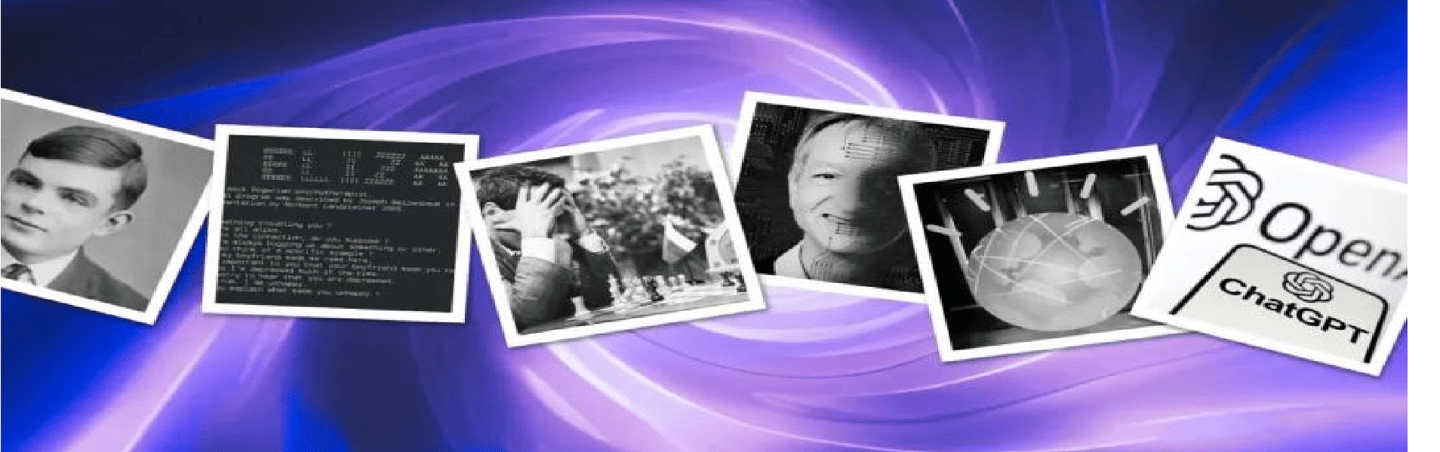

Exploring Artificial Intelligence and its Journey from Foundation to Genesis
Artificial Intelligence (AI) has evolved dramatically since its inception, shaping the way we interact with technology, conduct business, and even perceive the world around us. The journey of AI can be traced back to its foundational theories, conceptual frameworks, and significant milestones that have led to what we recognize today as modern AI.
The roots of AI can be found in the mid-20th century. Early pioneers like Alan Turing, who proposed the concept of a machine that could simulate any human intelligence, laid the groundwork for future developments. Turing’s work, particularly the Turing Test, initiated discussions about machine capabilities and sparked interest in automating cognitive processes.
In the 1950s and 1960s, the field began to take shape with the advent of the first AI programs. Researchers like John McCarthy and Marvin Minsky established AI as a legitimate academic discipline. Early successes, including programs that could solve mathematical problems and play games like chess, ignited enthusiasm and optimism about AI's potential.
However, progress was not linear. The period known as the "AI winter" in the 1970s and 1980s saw funding and interest wane due to unrealistic expectations and limited technological capabilities. Yet, crucial developments in computer science, such as machine learning and neural networks, would eventually revitalize the field. Accumulating vast amounts of data and enhancements in computing power allowed for the development of more sophisticated models.
The 1990s and 2000s marked a resurgence in AI research, driven by advances in algorithms and the increasing availability of data. The introduction of powerful machine learning techniques, especially deep learning, took the stage in the 2010s. This era was characterized by significant breakthroughs, including achievements in image recognition and natural language processing, resulting in real-world applications like virtual assistants and autonomous vehicles.
Today, the concept of AI extends beyond basic tasks. It encompasses various subfields such as robotics, natural language processing, and computer vision. Technologies powered by AI have transformed industries, revolutionized healthcare, optimized supply chains, and impacted personal lives through innovative solutions. The journey from foundational theories to the genesis of practical applications continues to progress, paving the way for a future where AI plays an integral role in our daily lives.
Despite its growth, AI raises important ethical questions and considerations, particularly regarding data privacy, bias, and the societal impacts of automation. The responsibility lies with developers, organizations, and policymakers to ensure that AI is harnessed ethically and benefits all of humanity. As we stand on the brink of an AI-driven revolution, it is crucial to reflect on its journey and shape its future wisely.
Questions? Reach out anytime.
Contact
Connect
© 2025. All rights reserved.